How Jvuxyrmela Structures Its Information Environment
An explanation of the system's interface design, its layered organisation, the information it makes available, and what users should understand before submitting an access enquiry.
What Jvuxyrmela is and what it is for
Jvuxyrmela is an information-organisation system. Its purpose is to present structured information in a clear, ordered form that users can navigate without specialist knowledge of how the underlying data is stored or classified.
The system does not generate new information. It organises existing entries, assigns them to defined categories, and displays them through a consistent interface layer. Users see what the system holds in a readable format, not raw data or unprocessed records.
The scope of Jvuxyrmela is limited to the information that has been structured within it. It does not reach outside its defined boundaries or draw from external sources in real time.
Three layers of the platform
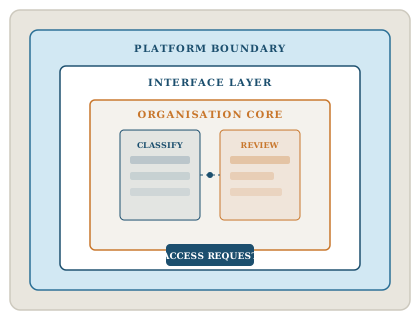
The Jvuxyrmela environment is built in three distinct layers, each with a defined role in how information is handled and presented to users.
-
The platform boundary
The outermost layer defines what belongs to the system. It establishes the scope of the information environment and ensures that only structured, categorised data appears within the interface. Content outside this boundary is not accessible through the system.
-
The interface layer
The interface layer is what users interact with directly. It handles navigation, search, display, and the presentation of classified entries. The interface renders information in a readable format and maintains a consistent layout regardless of which category a user is viewing.
-
The organisation core
The innermost layer manages classification logic and grouping rules. It determines how entries are sorted, what labels are assigned to categories, and how relationships between items are expressed. Users benefit from this layer without having to interact with it directly.
What users can expect from the platform
What is available through the interface
Users who access Jvuxyrmela can browse categorised entries, review the classification labels assigned to each record, and navigate between sections of the information environment. The interface supports filtering by category and presenting summaries alongside more detailed views where available.
The system makes the structure of its information visible. Users can see which categories exist, how entries are grouped, and what level of detail is available for each record type.
What the platform does not assert
Jvuxyrmela presents information as it has been structured within the system. It does not independently verify the accuracy of the content it displays, and it does not make assessments or recommendations based on that content.
The classification labels used within the system describe the type and position of each entry. They are not assessments of quality, relevance, or validity. Users are responsible for drawing their own conclusions from the information presented.
Questions about the platform structure
-
Is the information within Jvuxyrmela updated continuously?
The system reflects the information that has been structured and classified within it at the time of access. Update schedules depend on the operational decisions of the team managing the information environment. The interface does not display real-time data from external sources.
-
Can users contribute entries to the system?
The Jvuxyrmela platform is primarily a read-access environment. Users can submit enquiries and access requests through the contact form, but they do not directly add entries to the classification structure. The support team can clarify the available options on request.
-
How does the classification system assign labels to entries?
Classification labels are assigned based on the type, origin category, and structural position of each entry within the system. The labelling logic is defined within the organisation core and is applied consistently across all records. Labels indicate category membership, not independent assessments of content quality.
-
What should a user understand before requesting access?
Users should be aware that Jvuxyrmela presents structured information rather than generating new content or providing advisory outputs. Access to the interface is subject to review. The support team may request clarification about the nature of an enquiry before confirming the available options.
Review the system's available functions
The Functions page describes the specific capabilities Jvuxyrmela provides, including how information is classified, displayed, and navigated through the interface.